
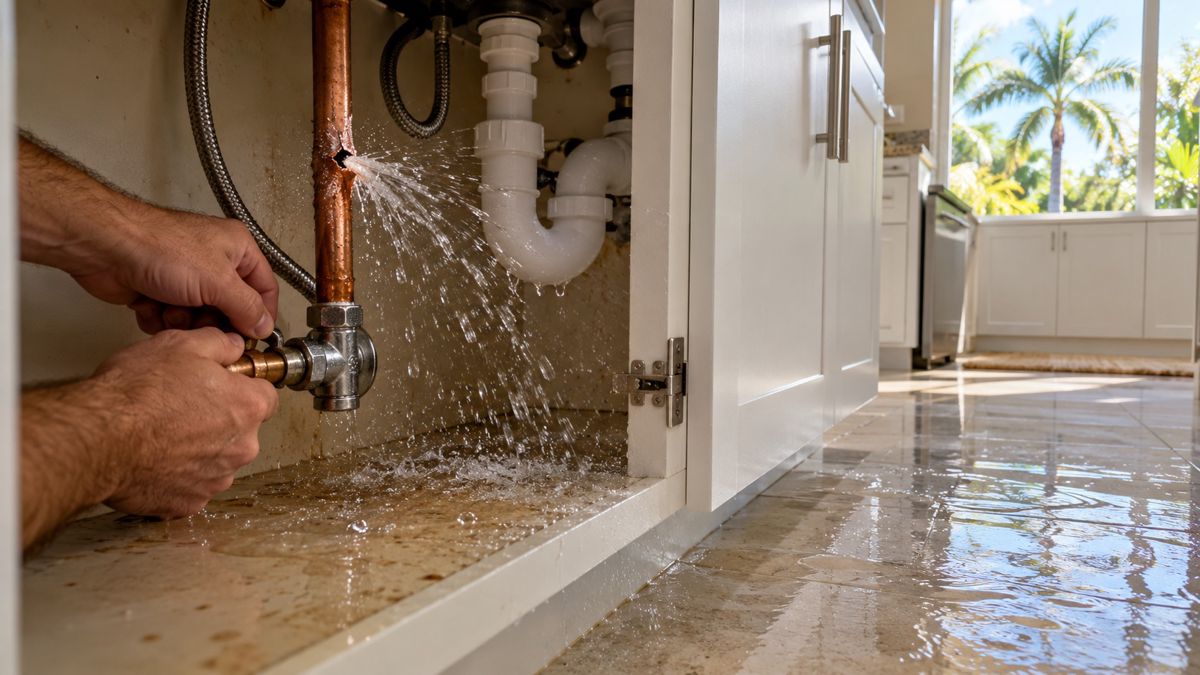
In the first 60 minutes after a pipe bursts, you need to do four things in order: stop the water, make the electrical situation safe, protect what you can, and document the damage. Then call your insurer and a restoration crew. Miami's heat and humidity make the clock tick faster than in cooler places, so a calm, steady plan helps. Here is the order, minute by minute, for a house or a condo.
Minutes 0 to 10: Stop the water at the source
Water damage grows with every minute the water runs, so shutting it off is always step one. Work from the nearest valve outward.
- Fixture shut-off. If the pipe is a supply line to a toilet, sink or washing machine, look for a small valve on the wall or floor near it and turn it clockwise until it stops.
- Main shut-off. If you cannot isolate the leak, turn off the water to the whole home. In many Miami houses the main valve is near the water meter box at the front of the property or on an exterior wall. It may need a pair of pliers or a meter key. Look before the emergency so you know where it is.
- Condo or apartment. Many units have their own shut-off in a utility closet or near the water heater. If you cannot find it, or the leak is coming from a shared pipe, call building maintenance or the front desk right away.
Once the water is off, open a faucet at the lowest point of the home to drain what is left in the lines. Turn off the water heater as well. For an electric unit, use the breaker. For a gas unit, switch it to the pilot or off setting.
Minutes 10 to 20: Deal with electricity and safety
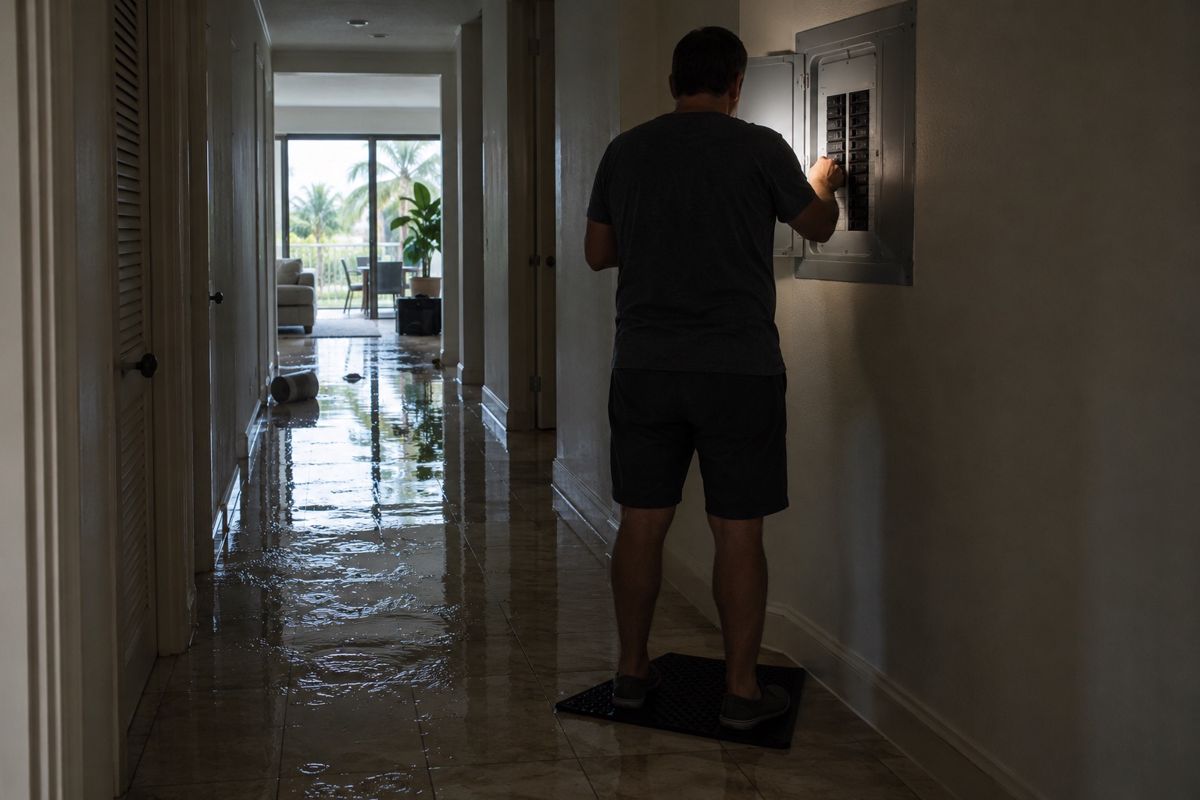
Water and electricity are a dangerous mix, and a burst pipe can send water into ceiling fixtures, outlets and the panel. Take a moment to look before you step into any wet room.
- If the electrical panel is dry and you can reach it without crossing wet floor, turn off the breakers for the affected rooms.
- If the panel is wet, or water is near it, stay out and call an electrician or your electric utility.
- Do not touch outlets, switches or appliances that are wet or sitting in water.
- If a ceiling is sagging, bulging or dripping heavily, keep people and pets out from under it and tell the crew when they arrive.
- If the air conditioner's air handler or any ducts got wet, switch the system off until it has been checked.
Use a flashlight rather than ceiling lights if the power is partly off, and do not use extension cords in wet areas.
Minutes 20 to 40: Protect what you can
Now that the water is off and the room is safe, move what you can before it soaks up more water.
- Lift furniture off wet floors, or place small blocks or foil under the legs so wood does not stain.
- Roll up and remove small rugs. Wet rugs on tile or wood leave marks.
- Move electronics, papers, photographs and clothing to a dry, higher spot.
- Mop or blot small amounts of water with towels. Use a wet vacuum made for water only if you can plug it into a safe outlet away from the wet area.
- Do not use a regular household vacuum on water.
It is tempting to open windows to help things dry. In Miami's humid air, that usually brings in more moisture. Keep the area closed up unless you are told otherwise, and use the air conditioner only if it is dry and safe to run.
Minutes 40 to 60: Document the damage and make the calls
Before you clean up too much, record what happened. This helps with insurance, and it helps the restoration crew understand the loss.
- Take photos and video of each affected room, including ceilings, walls, floors and furniture.
- Note the time you discovered the leak and the time you shut off the water.
- Keep the broken pipe or fitting if you can, and keep damaged items until your insurer says otherwise.
- Call your insurer or agent and ask how to file a claim. A sudden burst is usually treated differently from a slow leak, and flood damage from outside is often a separate policy, so ask what applies to you.
- Call a plumber to repair the line.
- Call a water damage crew to start extraction and drying.
If you live in a condo, tell the association or management in writing as soon as you can. Who is responsible for a pipe, and which insurance policy responds, can depend on where the water started. Your governing documents and your own policy both matter.
When you call the crew, have this ready:
- Where the water came from and whether it is still running
- Which rooms are wet and what the floors are made of
- How long the water has been there
- Whether the power is on or off
What not to do after a pipe bursts
A few common mistakes make a bad situation worse.
- Do not wait until morning. Wet drywall, baseboards and carpet pad can start to grow mold within a day or two.
- Do not use ceiling fixtures or fans under a ceiling that has taken on water.
- Do not rely on fans alone. They move damp air around, but they do not dry walls and subfloors.
- Do not throw everything out before you photograph it.
- Do not ignore a small leak behind a wall. It can keep going for weeks and rot framing and drywall.
Why Miami's climate raises the stakes
Miami's warm, humid air slows drying and speeds up mold. Many homes are concrete block with stucco on a slab, and floors of tile or terrazzo can hide water underneath while the surface looks fine. Water also moves into baseboards and the bottom of walls and stays there.
Burst pipes here do not come from freezing. They come from aging supply lines, worn braided hoses on washers, water heater failures, high pressure and corroded fittings. In condos and apartments, a leak above you can run down through several floors. Because the damage is often hidden, a moisture reading from a professional is more reliable than a surface check.
When to call a restoration crew
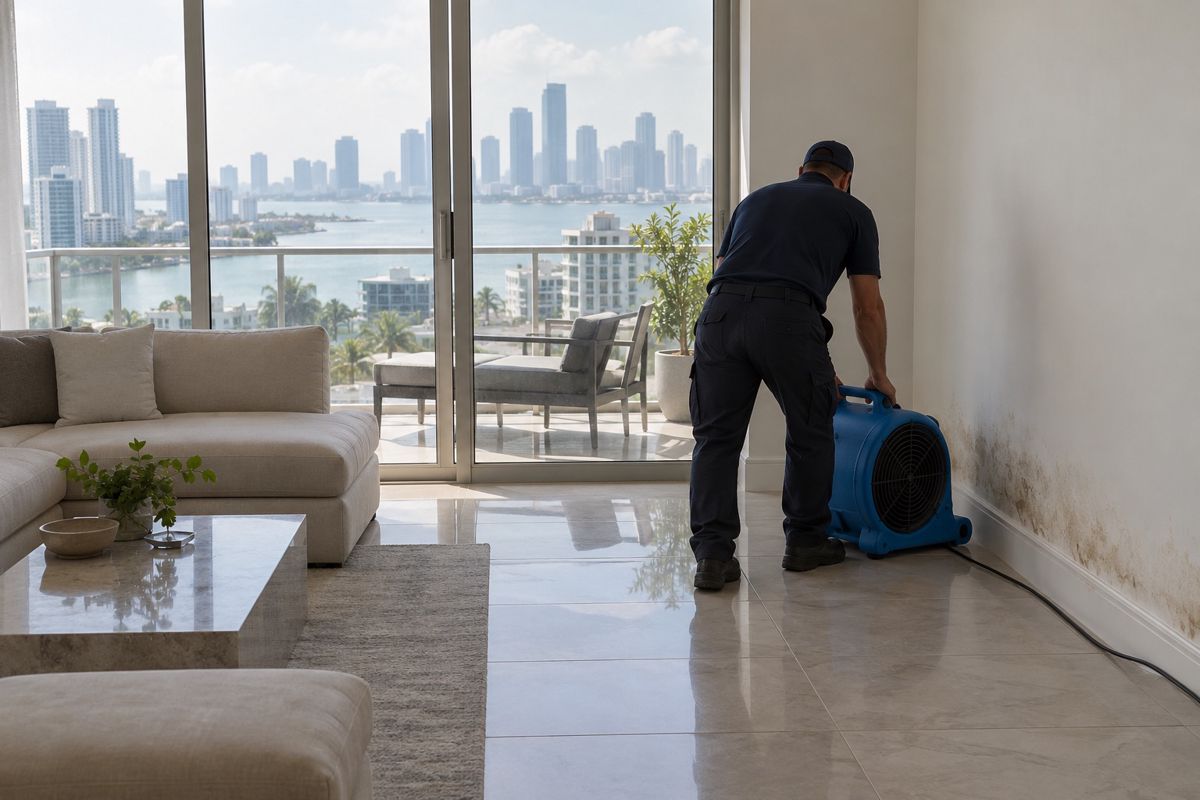
Call as soon as the water is off, even if you think the damage is small. A crew can pump out standing water, remove wet material that cannot be saved and set up drying equipment so mold does not follow. Our page on emergency water extraction in Miami explains how that first stage works, and what changes the price. You can also see the other services we cover on our home page.