Skip to content
Open 24/7Free inspection
Call now (305) 555-0108
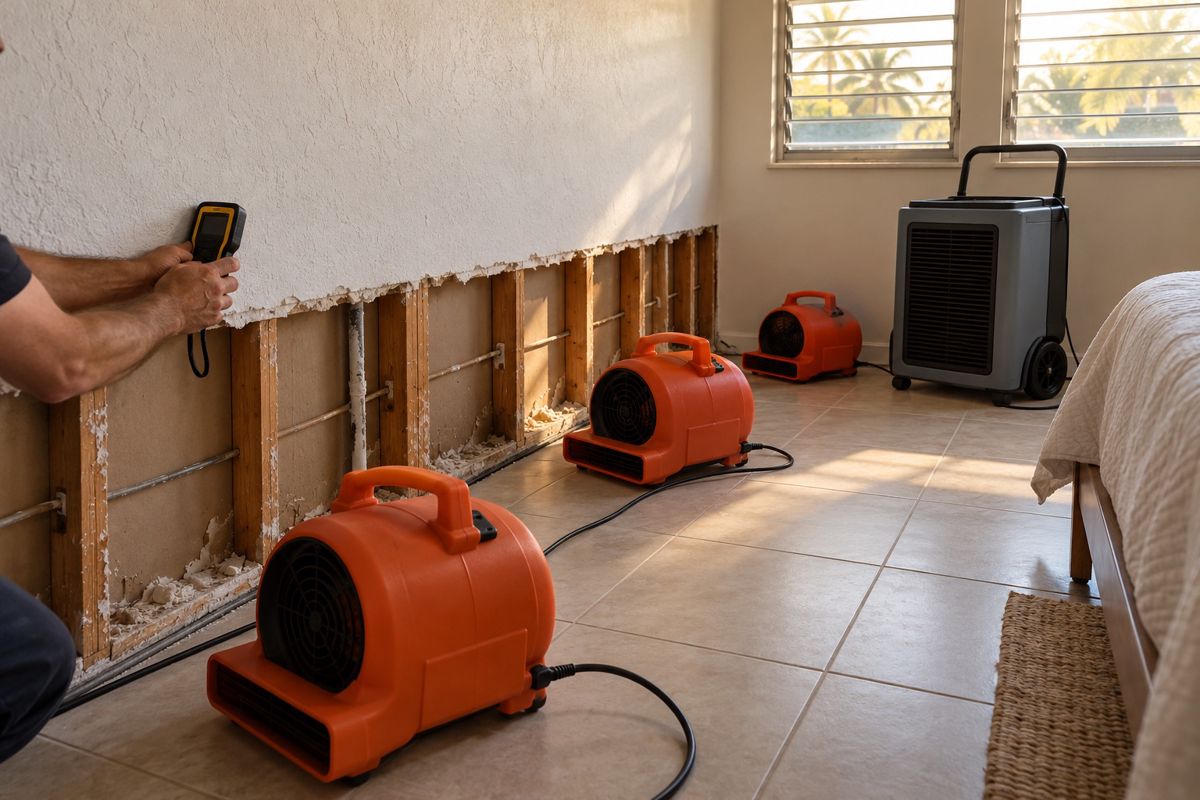
Air movers and a dehumidifier drying a wall in a Miami bedroom

Structural drying in Miami, FL

Structural drying services in Miami, FL

Water you cannot see is still water. We dry the walls, floors and framing so mold does not follow. Call (305) 555-0108 to talk it through.

  • Air movers and dehumidifiers matched to the space
  • Moisture readings tracked until it is dry
  • Plain explanation of the drying plan
What kind of damage?

Is water still coming in?

What are structural drying services?

Structural drying is the controlled removal of moisture from the building itself after the standing water is gone. That means drywall, framing, baseboards, cabinet bases, subfloors and even concrete slabs. A floor that feels dry on top can still hold water below.

The crew sets up air movers to push dry air across wet surfaces and dehumidifiers to pull moisture out of the air. Moisture meters tell the technician where the water really is, and the readings guide where equipment goes. This is different from running a fan for a day. A drying plan has targets, and the job ends when the building meets them.

Most jobs start with emergency water extraction and finish with drying. Skipping the second step is how hidden damage turns into a repair bill later.

Why is drying harder in Miami's humid climate?

Outdoor air in Miami often carries a lot of moisture, which slows evaporation. Opening windows to help a wet room dry usually makes things worse, because humid air comes in. Drying here works better in a closed space where dehumidifiers control the air.

Building materials add to the challenge. Concrete block walls and slabs absorb water and release it slowly. Stucco, tile and terrazzo can trap moisture behind and beneath them. Many condo units are sealed up and cooled, which helps once the air handler is safe to use, but a wet air handler or duct system needs checking first.

Slow drying matters because wet drywall, wood trim and carpet pad can grow mold within a day or two. If growth has already started, see our mold remediation page.

What changes the cost of structural drying?

We quote in writing after we see the damage. We do not give prices over the phone because the factors differ on every job.

  • Size of the wet area. More rooms and more wet wall mean more equipment.
  • Materials. Concrete and hardwood dry slowly. Drywall and carpet dry faster or are removed.
  • Drying time. Equipment stays on site until readings meet the target, and some materials take longer than others.
  • Removal needs. Wet drywall or insulation that cannot be dried has to come out.
  • Access. High-rise floors, parking rules and locked spaces affect setup.

Many insurers want moisture logs and photos. Ask yours what they need, and we will explain what we record.

Drying often takes several days, and it can take longer for dense materials such as slab and hardwood. A small, fresh leak may dry faster. We will not promise a number before we have taken readings, and we update the estimate as the readings change.

What to expect during drying

  • Equipment is set up on the first visit and runs around the clock.
  • It is noisy and uses electricity, so expect the room to be warm.
  • A technician returns to check readings and move equipment.
  • Doors and windows stay closed in the drying zone.
  • We compare final readings with an unaffected area before removing equipment.

Furniture and belongings in the room may need to be moved or lifted so air can reach the walls.

When should you call about hidden moisture?

Call us after any water extraction, even if the floor looks dry. Also call when you notice signs of water you did not see happen:

  • A musty smell that does not go away
  • Paint bubbling or peeling near a wall base
  • Baseboards that swell, or floors that cup or lift
  • A ceiling stain that returns after you paint over it
  • A wet feel on the wall after a storm

These signs usually mean water is still in the structure. Call (305) 555-0108 and we can talk through what you are seeing. For other services, see the main page of Miami Water Damage.

Open 24/7
Free inspection
Insurance claim help
Certified

How it works

  1. Call for help

    Tell us what happened and whether water is still coming in.

  2. Crew arrives

    We stop the source, extract water and set up drying.

  3. Restored

    Documentation for your insurer at every step.

Request structural drying

Tell us what you need and we call you back.

No obligation.

What kind of damage?

Is water still coming in?

Questions about water damage restoration in Miami

Do I need structural drying if the floor feels dry?

Often yes. Surface dryness does not mean the subfloor, wall cavity or slab edge is dry. Moisture readings tell the real story. If water was present for more than a short time, or it soaked into baseboards and drywall, drying and a follow-up reading are the safe approach.

Why do you leave the equipment running for days?

Water leaves materials slowly, especially in humid air. Air movers and dehumidifiers work together, and the job is only finished when the readings reach the target. Pulling equipment out early can leave damp spots that grow mold later. We check readings on each visit and remove equipment when the structure is dry.

Can I use my air conditioner to help dry the room?

Once the area is electrically safe, a working air conditioner helps control humidity. Do not run it if the air handler, return or ducts got wet, or if water is near the unit. Ask us first, because a wet system can spread moisture and contamination through the home.

Will you remove drywall or flooring?

Only when drying will not work. Materials that are contaminated, badly swollen or soaked through are usually removed. Others can be dried in place. We show you what we find and explain the options, and we remove only what we have discussed with you.

How do I know the structure is actually dry?

We use moisture meters and compare readings in the wet area against a dry area of the same material. When the readings match, drying is complete. We can share the readings with you, and many insurers also ask to see them.

Ready when you are. Call now or request a quote online.