
Skip to content
Open 24/7Free inspection
Call now (305) 555-0108
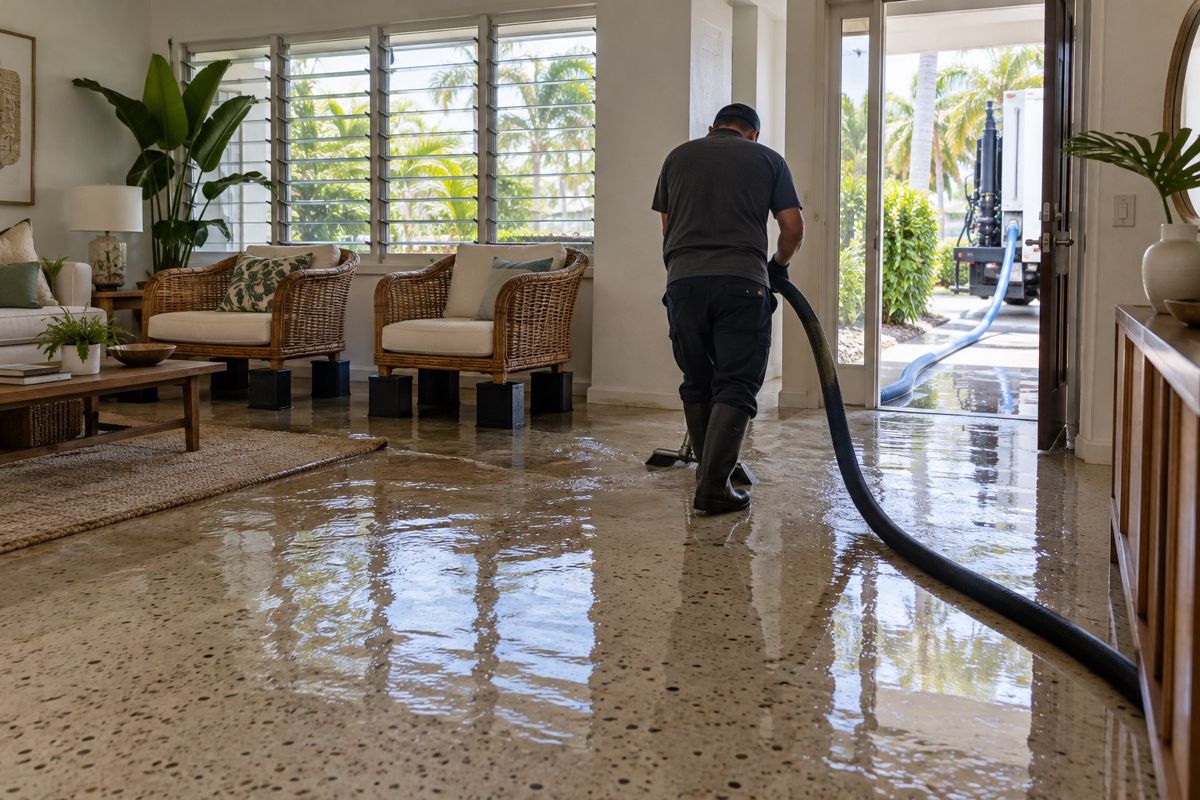
Technician extracting standing water from a terrazzo living room floor

Water extraction in Miami, FL

Emergency water extraction in Miami, FL

Standing water ruins floors, drywall and furniture quickly. Call (305) 555-0108 and tell us what happened so we can plan the extraction.

  • Pumps and extractors for standing water
  • Moisture readings before we leave
  • Written quote before work starts
What kind of damage?

Is water still coming in?

What does emergency water extraction involve?

Emergency water extraction means removing standing water from a property as quickly and completely as possible. It is the first stage of any water loss, and it sets up everything that follows. The longer water sits on tile grout, wood trim and the bottom edge of drywall, the further it spreads.

The work usually starts with a quick walk-through to find the source and check for electrical hazards. Then the crew uses submersible pumps for deeper water and extractors for what remains on floors and carpet. Wet carpet pad, soaked rugs and loose debris are lifted out so the surface can begin to dry.

Extraction removes the bulk of the water, but it does not finish the job. Walls, subfloors and cabinet bases hold moisture that a pump cannot reach, which is why most jobs move straight on to structural drying.

What causes sudden flooding in Miami homes and condos?

Miami has its own set of common causes. Some come from the weather and some come from the buildings themselves.

  • Heavy summer downpours and tropical storms that push water under doors and through damaged roofs
  • Burst or failed supply lines, often behind walls or above ceilings
  • Water heater tanks that fail in closets and garages
  • Air conditioner condensate lines that clog and overflow
  • A neighbor's leak running down through a condo or apartment ceiling

Many Miami homes are concrete block with stucco on a slab. Water that gets in tends to spread across tile, terrazzo and laminate and wick up into baseboards. In a multi-story building, one leak can reach several units, so tell building management early.

What changes the price of water extraction?

No honest company can name a price before seeing the loss. We give a written quote after we see the space. These are the main factors:

  • Amount and depth of water. A wet kitchen floor and a flooded ground floor are very different jobs.
  • Water source. Clean supply water is simpler than storm runoff or sewage.
  • Floor and wall materials. Carpet, pad, hardwood, tile and drywall each need different handling.
  • Access. Upper floors, tight garages and gated buildings can add time and equipment.
  • How long the water has been standing. Older losses usually mean more removal.

Some insurance policies cover sudden water losses, so keep photos and receipts. Ask your insurer what your policy covers before you agree to any larger repair.

Extraction itself is often a matter of hours on a typical home or condo unit, not days. A small leak may take part of a day. A larger flood across several rooms takes longer, and a multi-unit building can take more. We give our best estimate once we have seen the damage, and we do not promise an exact time in advance.

What to expect when the crew arrives

  1. We check for electrical hazards and shut off the water source if it is still running.
  2. We photograph the affected areas for your records.
  3. We pump and extract standing water.
  4. We remove soaked material that cannot be saved, such as wet carpet pad.
  5. We take moisture readings and explain the drying plan.

Expect some noise and a few doors and windows to stay closed.

When should you call for emergency water extraction?

Call as soon as you see standing water, a wet ceiling or water running from a wall. In Miami's humid air, wet materials stay wet, and delay gives mold a head start. Call (305) 555-0108 if:

  • The water is deeper than a quick mop job
  • The water came from a sewage line or from outside flooding
  • A ceiling is sagging or dripping
  • You cannot find or reach the shut-off valve
  • Water has reached outlets, appliances or the air handler

While you wait, shut off the water if you can do it safely, stay out of rooms where water is near live electrical, and move small valuables up high. Our home page lists the other services we cover, and mold remediation is covered separately if growth has already started.

Open 24/7
Free inspection
Insurance claim help
Certified

How it works

  1. Call for help

    Tell us what happened and whether water is still coming in.

  2. Crew arrives

    We stop the source, extract water and set up drying.

  3. Restored

    Documentation for your insurer at every step.

Request water extraction

Tell us what you need and we call you back.

No obligation.

What kind of damage?

Is water still coming in?

Questions about water damage restoration in Miami

What is the difference between water extraction and water removal?

The terms are often used the same way. Extraction usually means pumping and vacuuming standing water out of a space with professional equipment. It is the fast first step. Drying comes next and deals with the moisture left in walls, floors and framing. A job that stops after extraction can still develop mold in the damp structure.

Should I turn off the power before water extraction?

If water is near outlets, appliances or the panel, electricity is a real hazard. Turn off the breaker only if the panel is dry and you can reach it without stepping through water. Otherwise stay out and call an electrician or your electric utility. We check for electrical risk before we start pumping.

Can you extract water from carpet and save it?

Sometimes. Carpet that got wet from clean water and is treated quickly can often be dried in place, though the pad underneath usually has to be removed. If the water was contaminated, or has sat for a long time, carpet generally cannot be saved. We will tell you what we see before removing anything.

Does water extraction stop mold from growing?

It lowers the risk but does not remove it. Mold needs moisture, and extraction takes out most of the standing water. Damp drywall, wood and slab edges still need to be dried to normal levels. That second step is what usually decides whether mold appears later on.

What should I have ready when I call?

Tell us where the water came from and whether it is still running. Give us the rooms affected, the floor types, and how long the water has been there. Mention whether the power is on and whether it is a house, a condo or an apartment. Have your insurer's claim contact handy if you have already called them.

Ready when you are

Call now or request a quote online.

(305) 555-0108