Skip to content
Open 24/7Free inspection
Call now (305) 555-0108
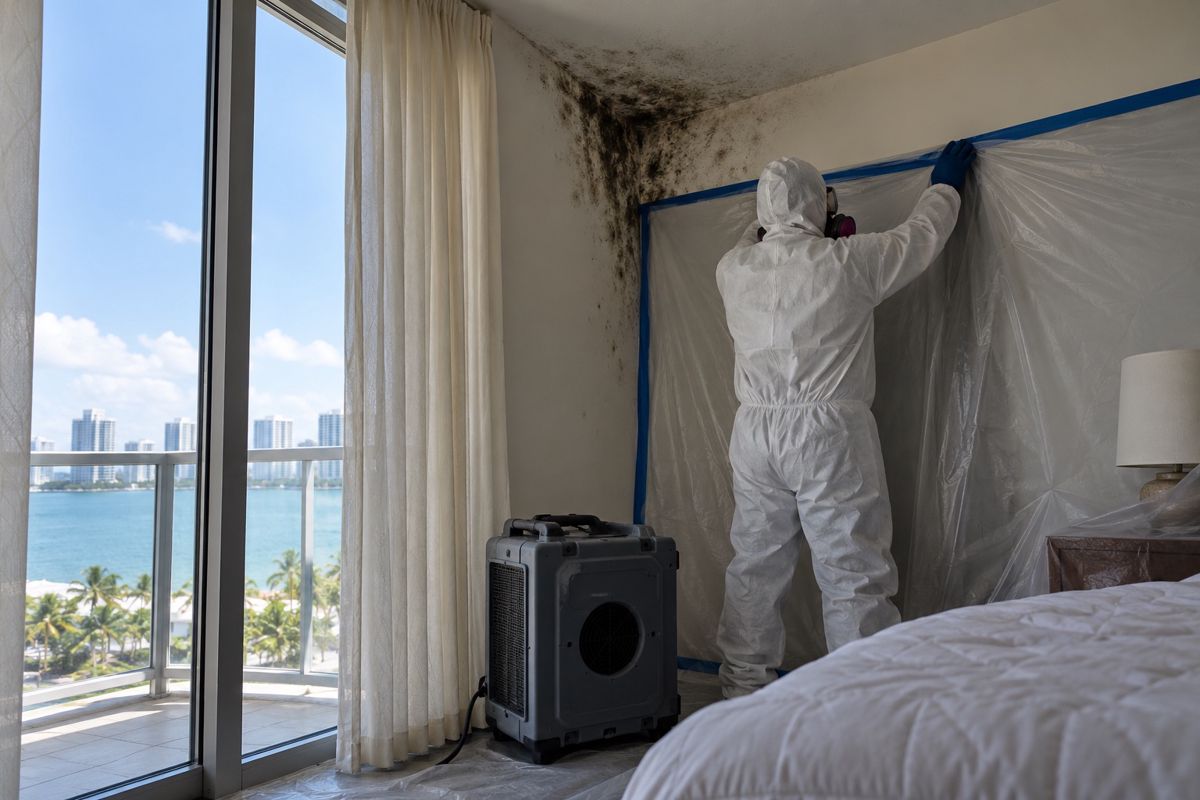
Technician in a respirator treating mold on a condo bedroom wall

Mold remediation in Miami, FL

Mold remediation and odor removal in Miami

Mold follows moisture. Call (305) 555-0108 and describe what you see or smell, and we will explain the safe next step.

  • Containment, removal and HEPA cleaning
  • Odor treatment and moisture control
  • Written quote before work starts
What kind of damage?

Is water still coming in?

What is mold remediation and when do you need it?

Mold remediation is the process of removing mold from a building and dealing with the moisture that allowed it to grow. The goal is to bring mold back to normal indoor levels, not to wipe it away for a week. If the damp source is not fixed, it returns.

You may need it when you see growth on walls, ceilings, baseboards or cabinets, when a musty smell lingers, or when water has sat in a building for more than a day or two. Small spots on a hard surface can sometimes be cleaned by the homeowner. Larger areas, growth on drywall, or any growth after sewage or flood water should be handled by a professional.

Moisture control comes first. That is why many jobs start with structural drying before cleaning.

Why is mold such a problem in Miami?

Warm temperatures, high humidity and heavy rain create ideal conditions for mold for much of the year. Hurricane season brings roof leaks and wind-driven rain. Air conditioners run constantly, and a clogged condensate line or a cold duct can keep moisture inside walls.

Typical trouble spots include:

  • Behind baseboards and under sinks after a slow leak
  • Around the air handler closet and ductwork
  • Bathroom walls and ceilings with weak ventilation
  • Closed-up condos and seasonal homes where the AC was turned off or set high
  • Drywall and carpet that stayed wet after a storm

Mold can start within about 24 to 48 hours on wet materials, so quick action after water damage matters. Fast water extraction is the best prevention.

How does Florida regulate mold work?

Florida has a state licensing program for mold assessors, who test and write the remediation plan, and for mold remediators, who do the removal. As a general rule, the same company is not allowed to do both on the same job, which keeps testing independent. Rules can change, so check the current requirements with the state.

When you hire anyone for mold work, ask to see the company's state license and look it up on the state's online license search. Ask for a written scope that explains where containment will go, what will be removed and how the moisture source will be fixed. Be careful with any company that offers to do testing, removal and verification all by itself.

We recommend that you get a written scope before any work starts. The same goes for any company, ours included.

A typical remediation looks like this:

  1. Find and stop the moisture source.
  2. Set up containment, often with plastic sheeting and air filtration, so spores do not spread.
  3. Remove materials that cannot be cleaned, such as moldy drywall or carpet pad.
  4. HEPA vacuum and clean surfaces that can be saved.
  5. Dry the area and treat remaining odors.
  6. Have an independent assessor confirm the area is clear, where this is required or wanted.

Cost depends on how large the area is, which materials are affected, access, how much containment is needed, and whether testing is involved. Time depends on the same things, and drying may take several days. We give a written quote after we see the space.

When should you call about mold or musty smells?

Call when you see visible growth, smell a persistent musty odor, or notice staining that spreads or returns. Call as well if water has sat in a home for more than a day or two, even if you cannot see mold yet.

  • Do not paint over it or use bleach as a quick fix
  • Do not disturb large areas, because that can spread spores
  • Turn off fans that would blow spores into other rooms
  • Keep children and anyone with breathing problems away
  • If someone feels unwell, speak to a doctor

Call (305) 555-0108 and describe what you see. See our home page for other services.

What you can expect

1

Open 24/7

2

Free inspection

3

Insurance claim help

4

Certified

How it works

  1. Call for help

    Tell us what happened and whether water is still coming in.

  2. Crew arrives

    We stop the source, extract water and set up drying.

  3. Restored

    Documentation for your insurer at every step.

Request mold remediation

Tell us what you need and we call you back.

No obligation.

What kind of damage?

Is water still coming in?

Questions about water damage restoration in Miami

Can I clean mold with bleach?

Bleach is not a good answer for most mold. It can remove color on hard surfaces, but it does not reach the roots in porous materials such as drywall and wood, and growth can return. Fumes also irritate the lungs. For anything larger than a small spot, get a professional opinion.

Do I need a mold test before remediation?

Not always, but testing by an independent assessor can be useful when the extent is unclear or when your insurer or association requests it. Florida generally keeps testing and removal separate. Ask the assessor for a written plan, then ask the remediator to follow it.

How long does mold remediation take?

It depends on how much is affected. A small area may take a day or two, while a larger loss with drying and rebuilding can run longer. We will not give a firm schedule until we have seen the space, and we update you if we find more hidden growth.

Will the mold come back?

Only if moisture returns. Mold needs water. After remediation the source has to be fixed, whether that is a leak, a roof opening, a drain line or high indoor humidity. Keeping indoor humidity under control with a working air conditioner also helps over the long term.

Does insurance cover mold removal?

Many Florida policies limit or exclude mold coverage, although some cover mold that results from a covered water loss up to a set limit. Read your policy, call your insurer early, and keep photos and notes about the original water event and when you found the mold.

Is mold in a condo the unit owner's problem or the association's?

It depends on where the moisture came from. A leak from a common pipe or wall can be the association's responsibility, while a leak inside your unit may be yours. Tell management in writing, take photos, and read your governing documents and insurance policy.

Ready when you are

Call now or request a quote online.

(305) 555-0108