Skip to content
Open 24/7Free inspection
Call now (305) 555-0108
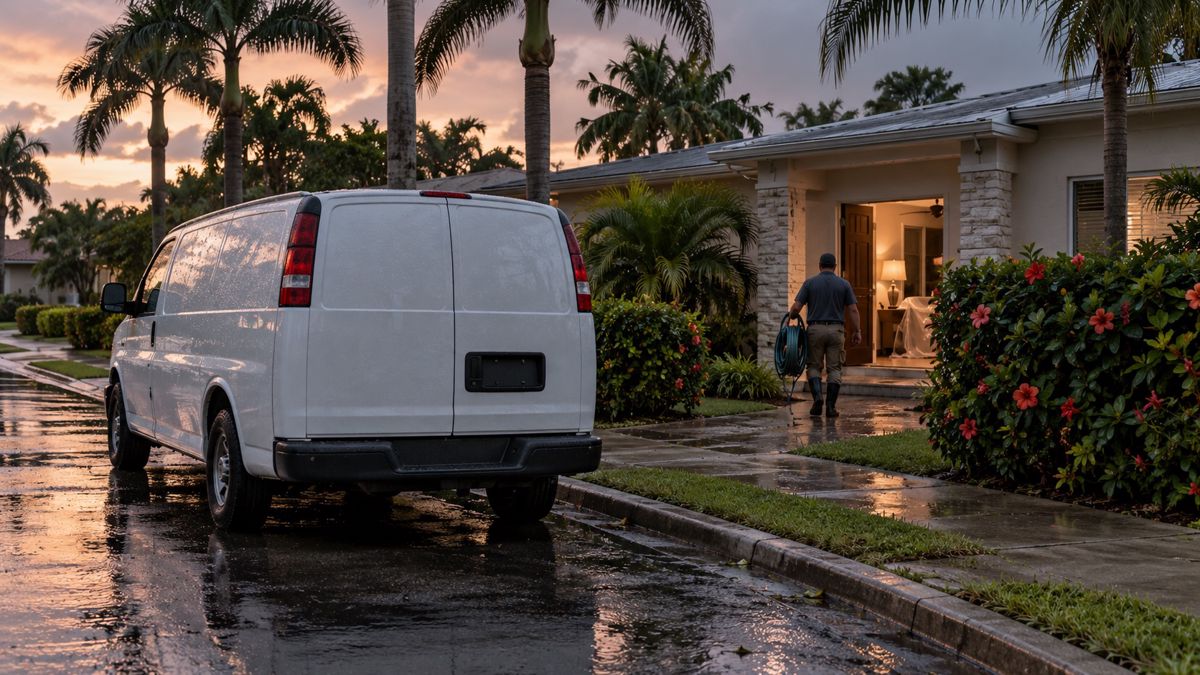
Stucco house on a wet Miami street with a service van outside

High-rise condos and shared building systems

Water damage restoration in Brickell, Miami

Extraction, drying, sewage cleanup and mold work for Brickell condos, offices and apartments. Send a quote request and we will confirm availability for your building.

  • Water extraction and structural drying
  • Sewage, basement and mold cleanup
  • Written quote before work starts
What kind of damage?

Is water still coming in?

How a leak behaves inside a Brickell high-rise

Brickell is a dense strip of residential towers, offices and hotels along Brickell Avenue and the streets around I-95, and water behaves differently in a tall building than in a house. A failed supply line, a washing machine hose or an air conditioner drain can send water through a floor slab and into the unit below, then down again to the one beneath that.

That is why a small leak in one condo can become a multi-unit loss. The first job is to find where the water is traveling, not just where it is visible. Ceilings, wall cavities and the cabinets under sinks often hold moisture long after the surface looks dry.

Risers, shared stacks and sealed units

Towers rely on risers and drain stacks that serve many units at once. A blockage in a stack can push waste water back into the lowest connected fixtures, and a failed riser valve can flood several floors. Because the building is sealed and air conditioned, humid air stays inside, and wet drywall or carpet padding can stay damp for a long time.

Condo layouts also bring concrete floors, built-in cabinetry, stone countertops and wood or tile finishes that react differently to moisture. Balcony doors and window walls can leak in a heavy storm, which is another route for water that many owners do not expect. Careful moisture mapping separates the wet from the dry.
Water damage services we offer in Brickell

Each of our five services has its own page. In a Brickell tower they usually work together.

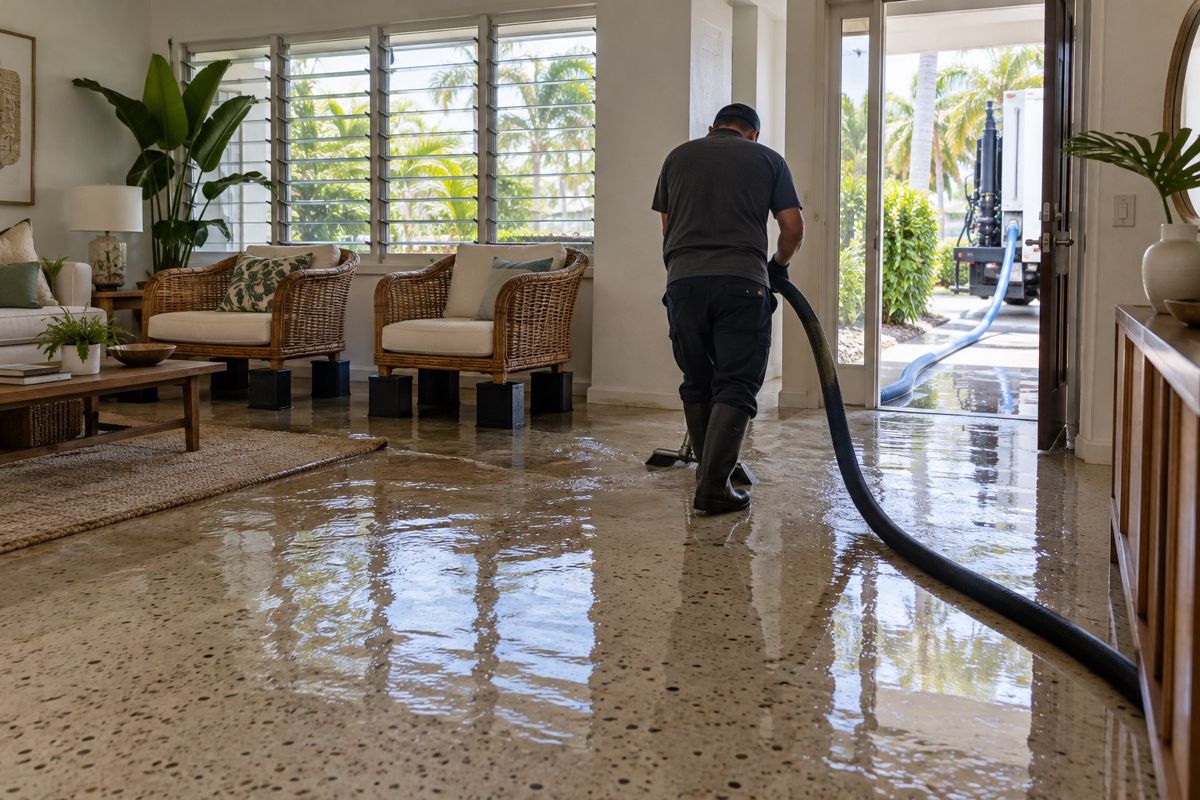
  • Emergency water extraction to remove standing water from tile, carpet and under cabinets before it spreads through the slab.
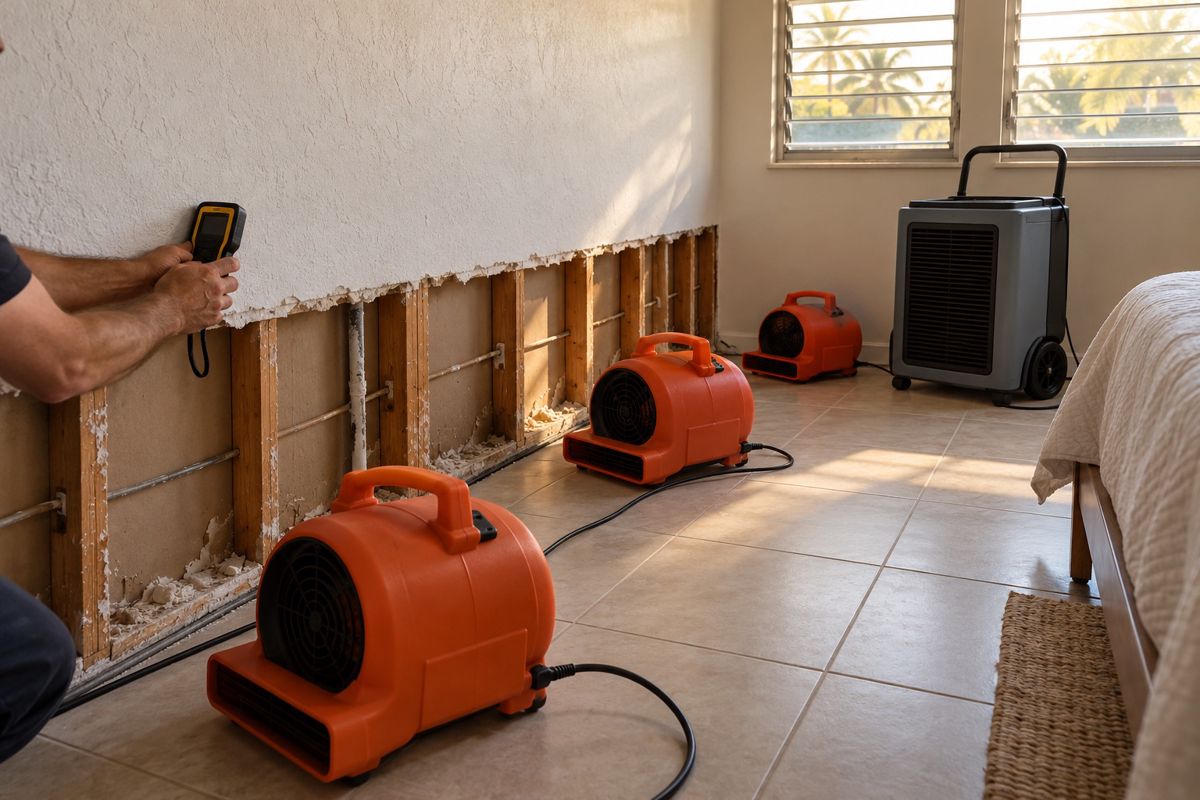
  • Structural drying with air movers and dehumidifiers, plus readings that show when walls and subfloors are dry.
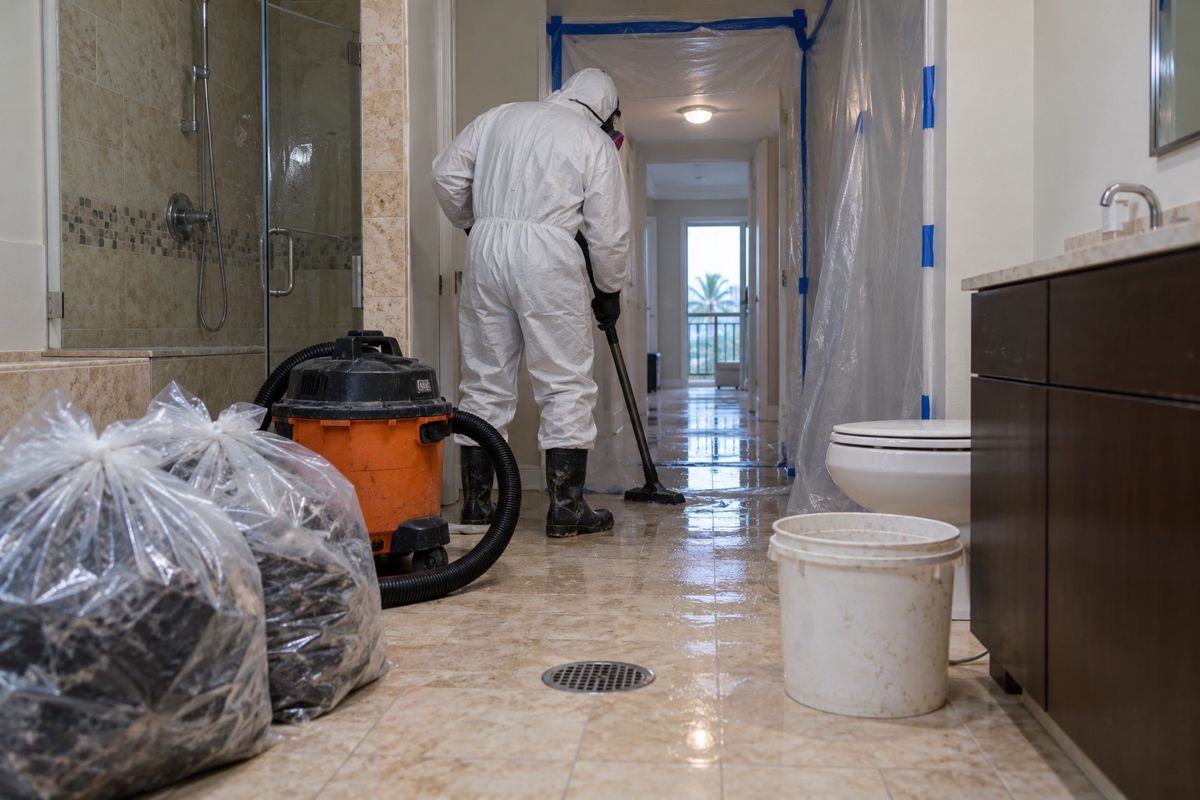
  • Sewage cleanup for backups from shared stacks that reach bathrooms and kitchens.
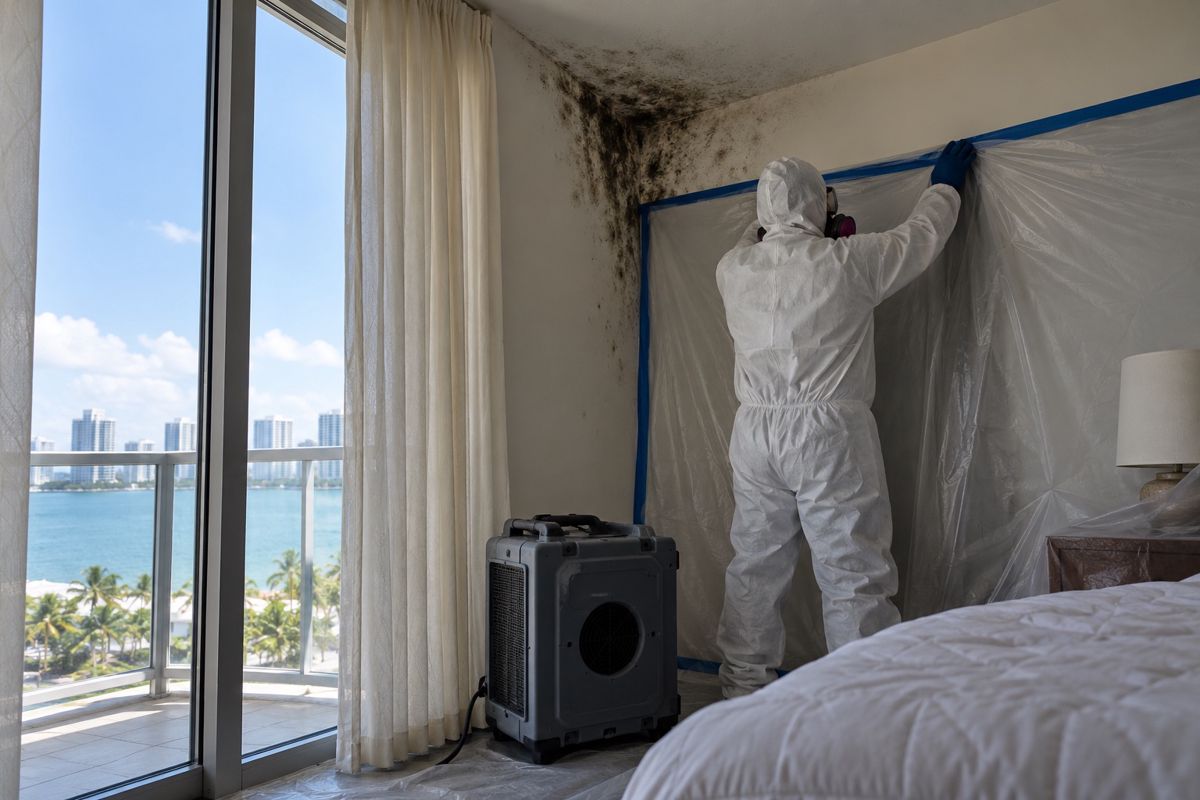
  • Mold remediation for closed-up units where moisture has been left too long.
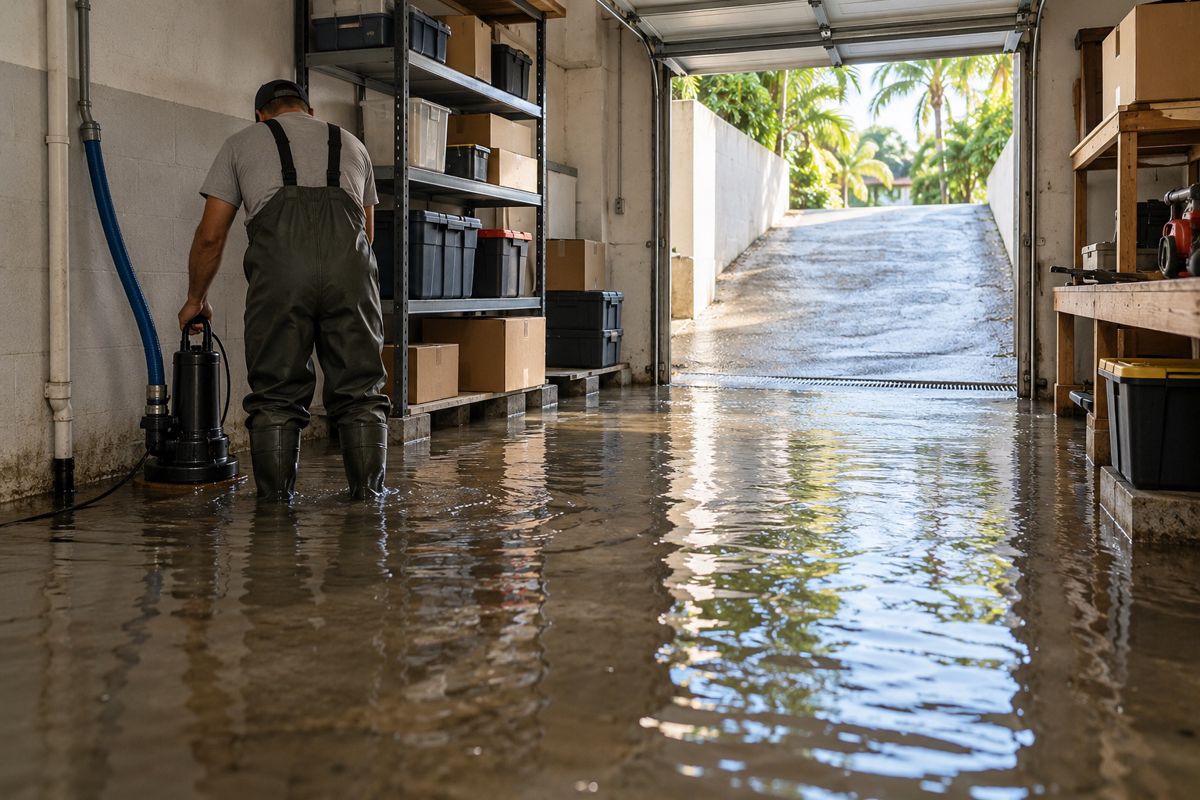
  • Below-grade cleanup for garage levels, storage rooms and utility spaces under the building.

Several of these often run together on one loss.

Working in a tower means working with the building. Managers commonly ask for contractor paperwork, reserved elevator time and limits on noise or work hours, and some buildings require a representative on site. Telling us early which rules apply makes the first visit smoother.

  • Give us the management contact and any access forms.
  • Ask whether the loading dock or service elevator needs a booking.
  • Report the leak to the association so the source can be shut off.
  • Photograph affected units, including those below or beside yours.

When several units are involved, written notes from each owner help sort out responsibility.

Insurance, owners and tenants in a condo

In a condominium, the association's master policy and an owner's own policy often cover different parts of the unit, and the dividing line is set by your documents. A tenant may also have a renters policy. We cannot tell you what is covered, but we can describe the damage and the work in plain language, and we keep photos and moisture records that your insurer may ask for.

Florida policies typically expect you to take reasonable steps to prevent further damage. Starting extraction and drying quickly is one of those steps, and the paperwork from the job supports your claim.

Requesting a quote for a Brickell unit

We serve Brickell from Miami and do not keep a crew on site, so the request is how we confirm availability for your building. Use the form or call (305) 555-0108.

  1. Give the building name, the unit and the source of the water, if known.
  2. Say whether other units appear to be affected.
  3. Send a few photos of wet floors, ceilings or walls.
  4. Share the manager's contact so we can arrange access.
  5. A written quote explains the plan, and work waits for your approval.

If you are an owner away from Miami, a property manager or relative can meet the technician and share access details on your behalf.

Get a quote in Brickell

Tell us what you need and we call you back.

No obligation.

What kind of damage?

Is water still coming in?

Questions about Brickell

My upstairs neighbor's leak damaged my ceiling. Who handles it?

Usually the cause and the policies decide that, and your association can explain the building's process. Whatever the answer, the water still has to be dealt with. We can extract and dry affected areas and document everything, so that your insurer and the other party have clear records to work from. Keep your own photos either way.

Can water travel between condo units?

Yes. It can follow slabs, pipe chases and wall cavities into adjacent and lower units. Moisture readings in neighboring spaces are therefore part of a proper inspection. We check areas around the visible damage to see how far the moisture has gone before suggesting a drying plan. Neighbors who allow a quick look help everyone understand the full picture.

Do you need access to the whole building?

Not usually, but we need the affected unit, a route in and sometimes shut-off points. The building manager can authorize access and elevator use. Giving us their contact early prevents delays, and it lets us follow house rules about hours, noise and protection of common areas. Parking for equipment vans and a path for hoses are the other practical details we ask about.

Why does my condo smell musty after a leak?

Damp drywall, carpet padding or cabinet bases can hold moisture and encourage mold or bacteria. A closed, air conditioned unit does not dry out on its own. A technician can find hidden wet spots with meters and explain whether drying will do or whether materials need removal. Odors that return when the air conditioner runs are a warning sign worth acting on.

How do I stop a leak before the crew arrives?

Shut off the water at the unit's valve, or ask the building to close the riser if you cannot find it. Turn off power to wet areas if it is safe, move belongings, and take photos. Do not use a vacuum on standing water. Then send us a quote request with details. Never touch electrical outlets in wet areas.

Ready when you are

Call now or request a quote online.

(305) 555-0108