Skip to content
Open 24/7Free inspection
Call now (305) 555-0108
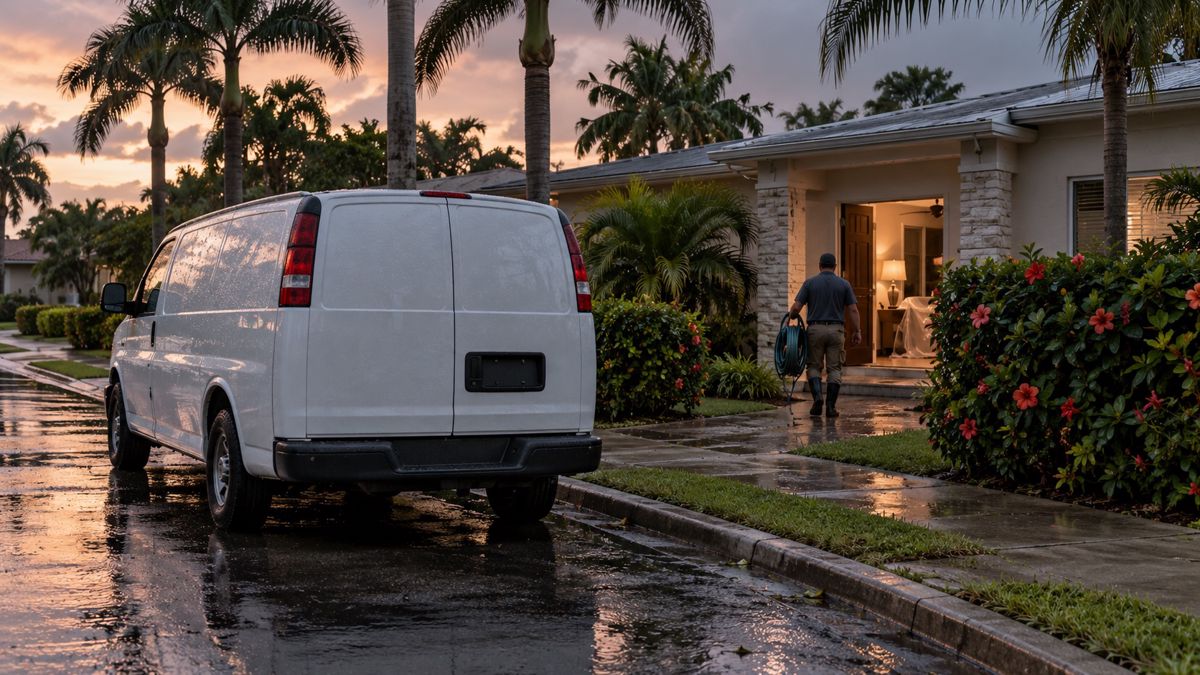
Stucco house on a wet Miami street with a service van outside

Suburban ranch homes and attic air handlers

Water damage cleanup and drying in Kendall, FL

Help for suburban houses, townhomes and small offices with ceiling leaks, AC overflow, rain flooding and mold. Request a quote and we will confirm availability.

  • Water extraction and structural drying
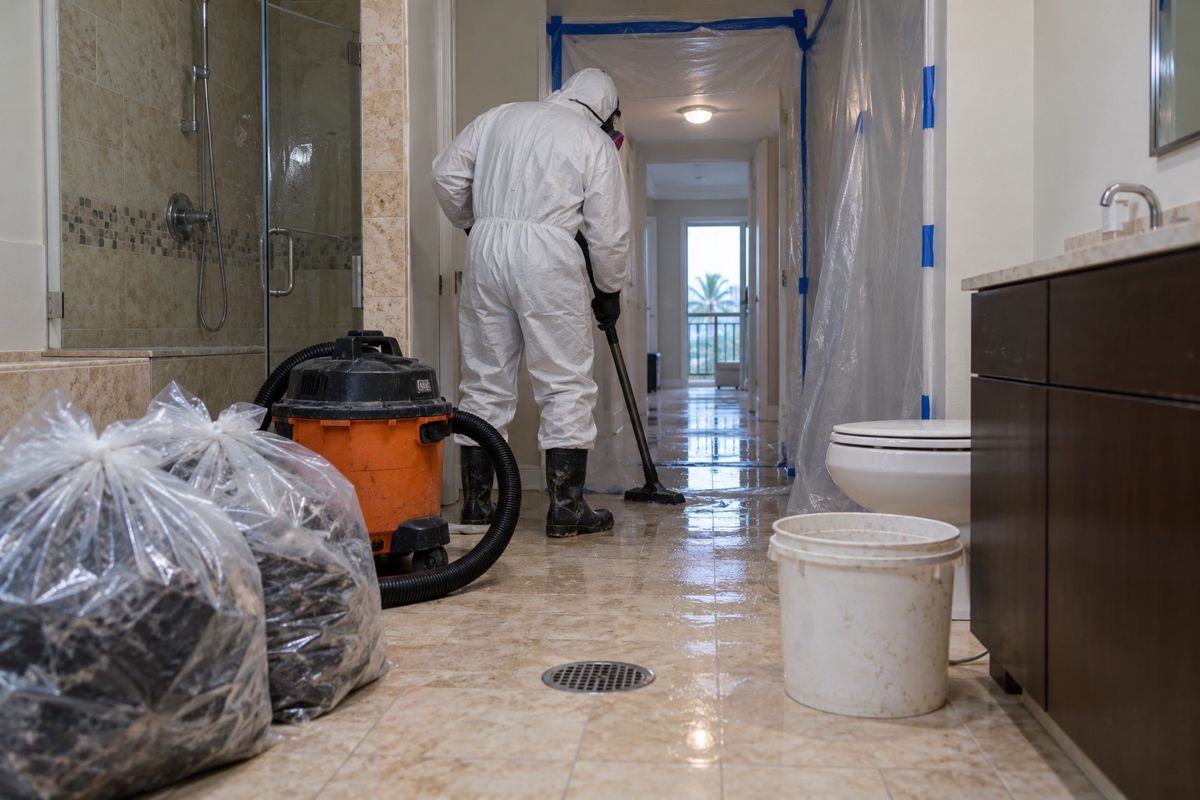
  • Sewage, basement and mold cleanup
  • Written quote before work starts
What kind of damage?

Is water still coming in?

A large suburb with a familiar set of water problems

Kendall is a wide suburban area of southwest Miami-Dade, crossed by Kendall Drive, the Palmetto Expressway and the Turnpike. Many homes are single-story ranch houses or two-story family houses built from the 1970s onward, with tile or shingle roofs, attached garages and screened pools. Subdivisions are close together and residents often have similar floor plans.

That sameness helps us. The same weak points show up again and again: an air handler in the attic, a water heater in the garage, a supply line to the refrigerator, and flashing around a roof penetration. Knowing where to look speeds up the search for the source.

Attic air conditioners and ceilings that give way

In many Kendall homes the air handler sits in the attic. When its drain line clogs or the pan rusts through, condensate drips onto the ceiling drywall below. The ceiling may bulge, stain or even drop in a section, and insulation above it can hold the water for a long time.

Heavy summer storms add another source. Streets and yards can flood quickly, while gutters, roof valleys and tile joints can leak into walls. Because the water so often arrives from above, ceilings, light fixtures and wall tops need to be checked even when the floor looks fine. Safety around sagging ceilings comes first.
Water damage services we provide in Kendall

Our five services each have a separate page. Here is how they usually apply to a suburban house.

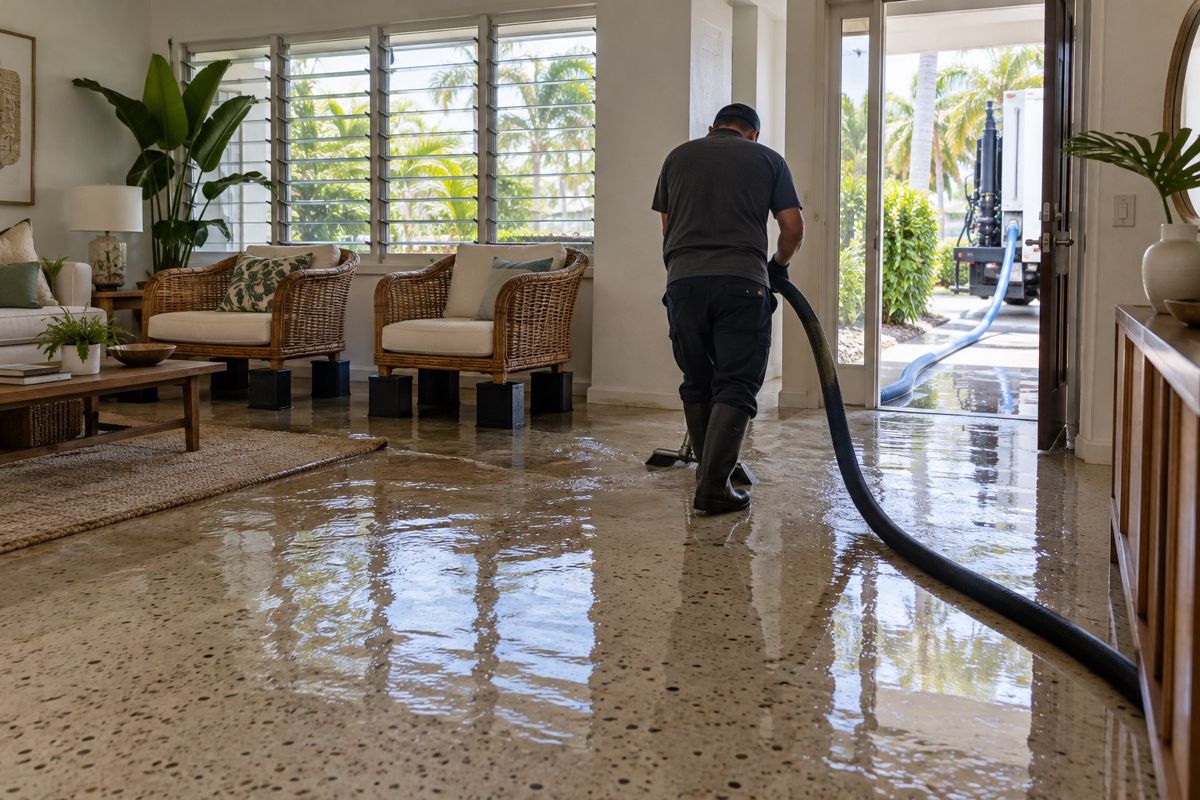
  • Emergency water extraction for floors soaked by water heater leaks, supply line failures and rain that came in under doors.
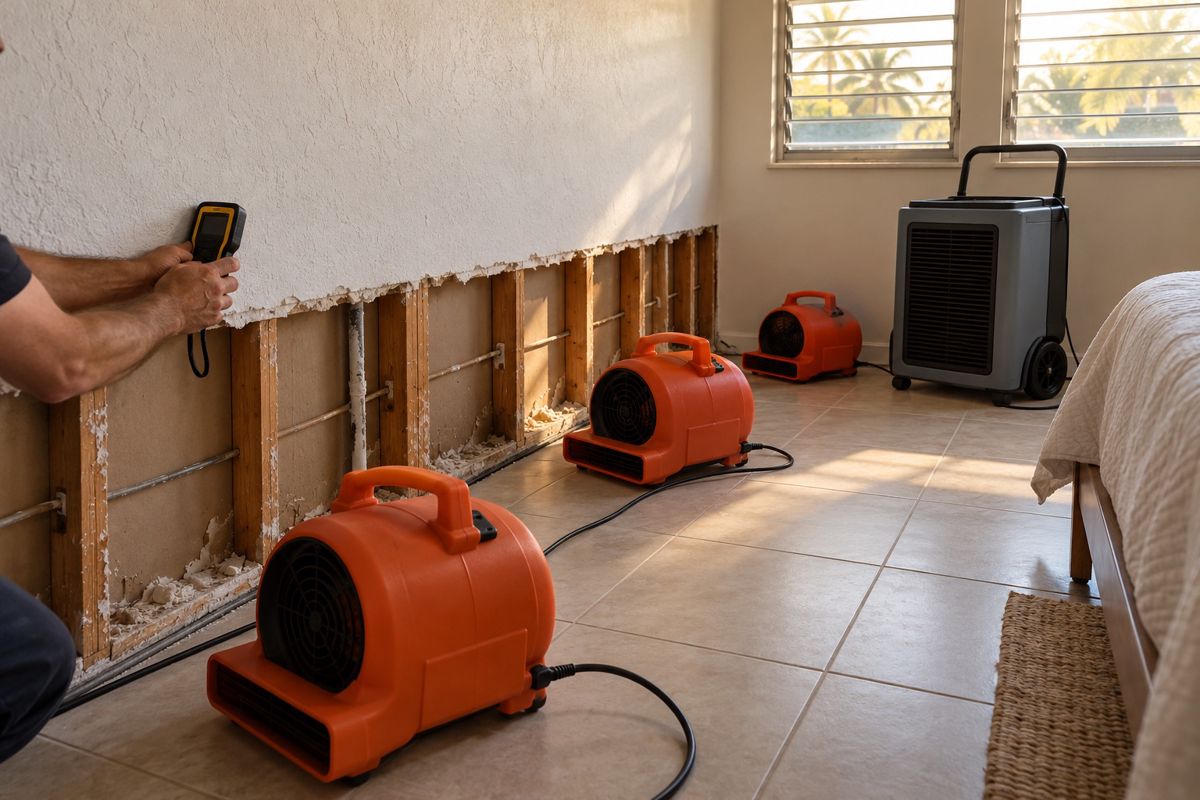
  • Structural drying for ceilings, wall cavities, cabinets and flooring that need steady drying.
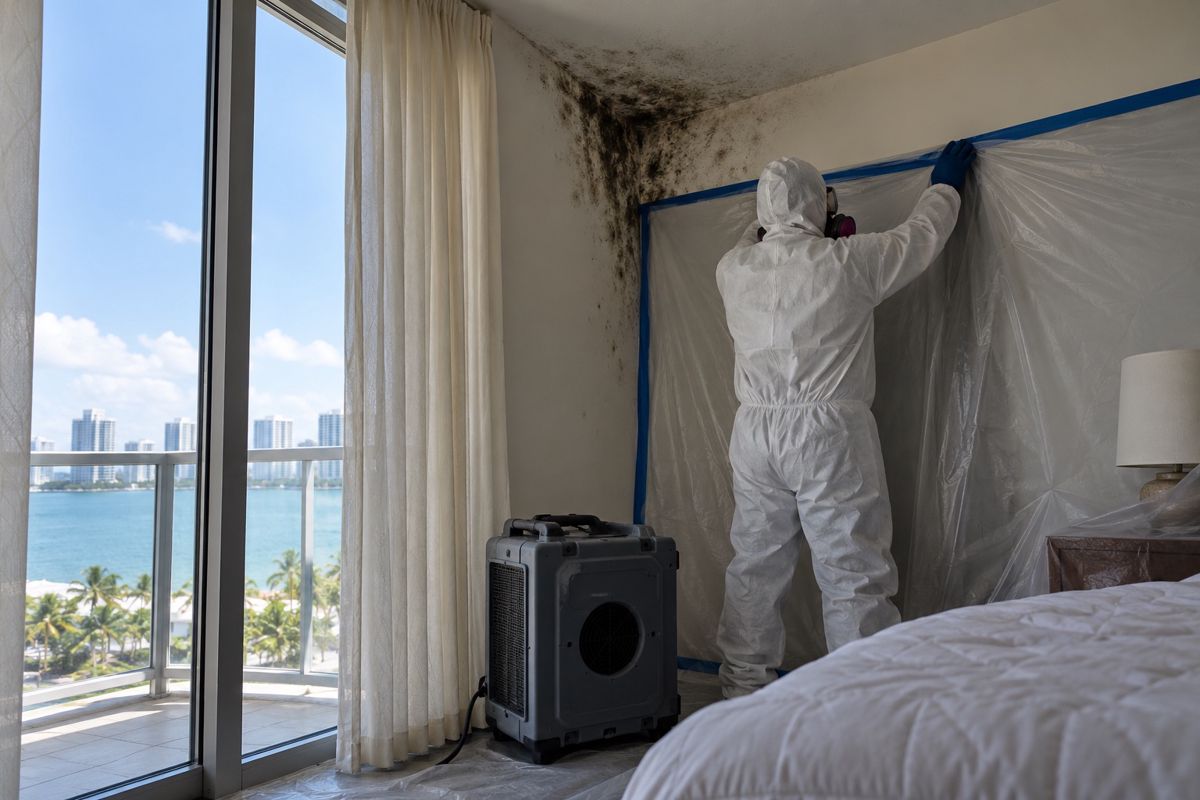
  • Mold remediation for ceilings and closets where an AC leak or roof leak lingered.
  • Sewage cleanup for backups, including those from septic systems where they still exist.
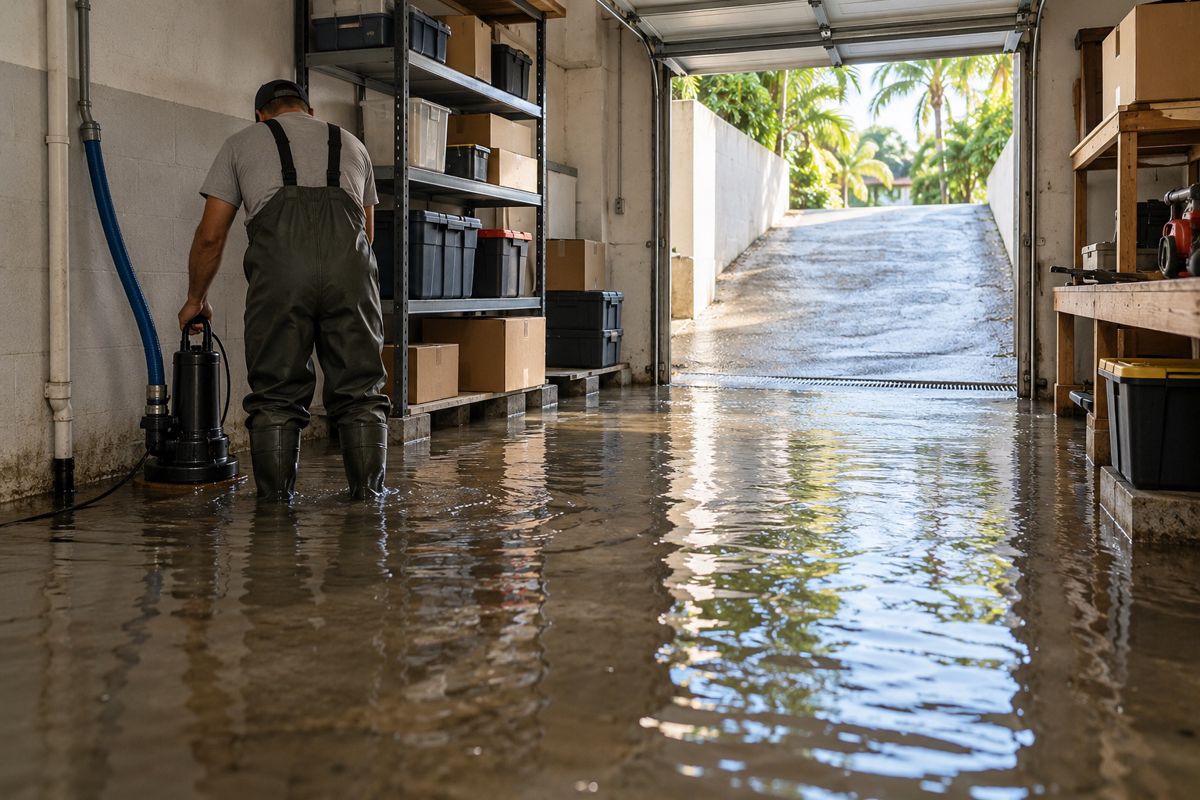
  • Low-area cleanup for sunken garages, workshops and storage rooms that flood during storms.

Many repairs involve two of these together.

We serve Kendall from Miami, so the request is how we confirm availability for your street. Call (305) 555-0108 or use the form.

  1. Tell us where you see water and where you think it began.
  2. Mention if the ceiling is sagging so we can plan for safety.
  3. Send photos of the wet areas and the attic hatch if relevant.
  4. We inspect with moisture meters and, where needed, a thermal camera.
  5. A written quote explains what will be dried and what may need removal.

Mentioning a recent roof repair, a new appliance or earlier leaks helps the inspector connect the dots. Photos from the attic can be especially helpful.

What shapes the plan and the cost for a house

Several general factors guide the size of the job:

  • Source and duration. A short, clean leak is simpler than a slow one that went unnoticed.
  • Materials. Drywall, insulation, wood trim and carpet each have different limits.
  • Height. Ceiling work in rooms with high ceilings needs more equipment.
  • Number of rooms. Water often reaches more rooms than you can see.

We describe each of these in writing, so you know why the plan looks the way it does. Rooms with tall ceilings, fans and recessed lights need extra care, since water can collect in fixtures. We turn off power to affected circuits before we work, and we ask you not to use switches in wet areas. A quick tour at the start covers these risks.

Homeowners policies, septic and records

Insurance companies often ask what caused the loss, when it started and what steps were taken. A plumber's or roofer's report can answer the first, and our photos and moisture logs answer the rest. We do not judge coverage, but we help you assemble the facts.

Parts of Kendall still use septic systems. If a drain field or tank fails, sewage can rise into the house or yard, and that needs a septic professional for the cause and sanitizing for the cleanup. Keep any receipts from emergency work. Ask for copies of everything we write.

Get a quote in Kendall

Tell us what you need and we call you back.

No obligation.

What kind of damage?

Is water still coming in?

Questions about Kendall

My ceiling is sagging. What should I do?

Stay out from under it, turn off power to that area if it is safe to do so, and place a bucket where it drips. If you can, poke a small hole to drain trapped water carefully. Then contact us with photos, since the ceiling and insulation will probably need attention. Cover furniture with plastic if you can.

How do I know if the AC drain is causing a leak?

Look for water near the air handler, a full or rusty pan, or stains on the ceiling beneath it. A clogged drain line is a frequent cause. Turn off the system to stop more water from forming, and send a quote request so we can dry what was soaked. A wet vacuum on the drain line outlet often clears it temporarily, though a technician should flush the line properly.

Does heavy rain flood Kendall homes?

It can, especially in low spots or where drainage is slow. Water can enter through garage doors, thresholds and walls. If it does, ventilate, move belongings off the floor and call for extraction. Clean rainwater in a house can still turn into a problem if it stays. Raised door thresholds and swales in the yard help, though they do not stop every storm.

Can attic insulation be dried or must it be replaced?

Wet insulation often loses its value and can hold moisture against drywall and framing. Sometimes it can be dried, but removal is common after a long leak. A technician checks readings and explains which sections should be replaced and why. Keep a record of what was removed, with photos of each section and the date of removal, because insurers often want proof of what was replaced. Fiberglass and cellulose behave differently when wet.

Should I worry about mold after a small AC leak?

If it was caught quickly and dried well, the risk is lower. A leak that sat for days is more likely to have started growth. Look for stains, a musty smell or dark spots. If you notice any, ask for an inspection before closing the area up. It is better to check early than to find a stain months later.

Ready when you are

Call now or request a quote online.

(305) 555-0108